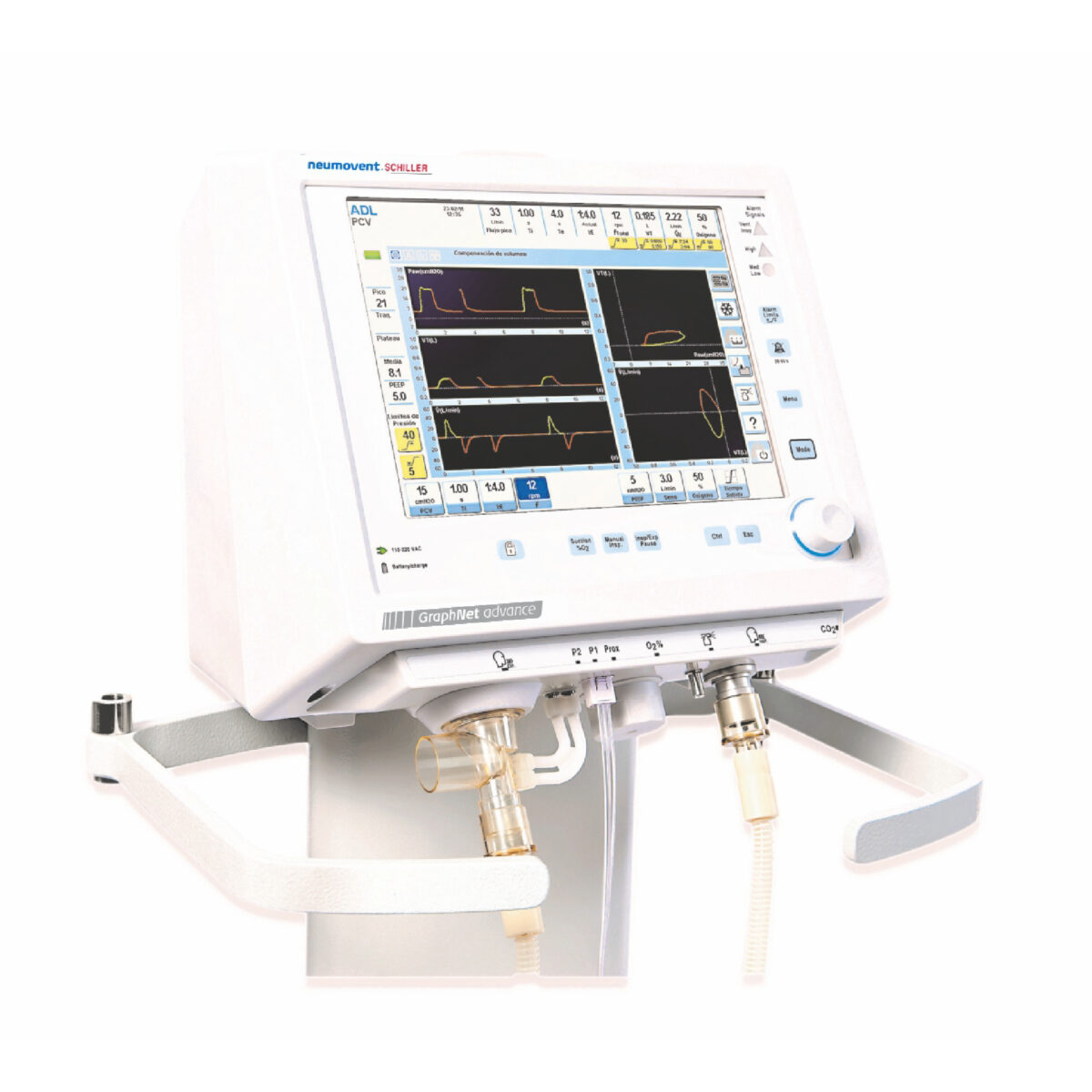
Neumovent(Universal-Adult, Paediatric & Neonatal Ventilator)
GraphNet advance is a universal ventilator for adult, pediatric, and neonatal patients, supporting invasive and non‑invasive ventilation. It features a 12.1″ TFT‑LED touchscreen, proximal flow sensor, advanced modes (PRVC, APRV, MMV+PSV, VSV), integrated nebulizer, leak/circuit/tube compensation, and advanced lung‑mechanics monitoring (Auto‑PEEP, WOBi, PaFi).
Key Features
- Premium Quality Equipment
- Free Installation Support
- Manufacturer Warranty
- 24/7 Technical Support
Product Description
1. What It Is & Who It’s For
-GraphNet advance is a universal mechanical ventilator — supports adult, paediatric, and neonatal patients.
-It provides both invasive and non‑invasive ventilation, making it suitable for a wide range of clinical situations.
2. 🖥️ Interface & Core Hardware
-Display: 12.1″ TFT‑LED colour touchscreen — enables simultaneous viewing of waveforms and loops.
Proximal flow sensor (neonatal‑ready) — optimised for neonatal/pediatric use.
Tidal volume correction: Automatically corrects delivered tidal volume per BTPS (body temperature, pressure, saturation).
-Compensation & leak management: Endotracheal‑tube, circuit compliance, altitude, and leak compensation are supported in all modes.
Integrated nebulizer: Volume‑compensated & inspiratory‑synchronised nebulizer built-in, useful for aerosol therapy.
3. 🌬️ Ventilation Modes & Therapy Options
-GraphNet advance supports a broad set of ventilation modes — for adults, paediatrics, and neonates.
-Standard & Advanced Modes
-Volume Control Ventilation (VCV) — assisted or controlled
-Pressure Control Ventilation (PCV) — assisted or controlled
-Pressure Support Ventilation (PSV)
-Continuous Positive Airway Pressure (CPAP)
-Synchronized Intermittent Mandatory Ventilation (SIMV) — combinations: VCV + PSV, PCV + PSV, or PRVC + PSV
-Pressure‑Regulated Volume Control (PRVC)
-Volume Support Ventilation (VSV)
-Adaptive Ventilatory Assistance (AVA) — “closed‑loop” adaptive mode (optional/advanced)
-High Flow Oxygen Therapy (HFOT / HFNC)
-Neonatal / Pediatric‑Focused Modes
-TCPL (Time-Cycled Pressure-Limited)
-SIMV (TCPL) + PSV
-N‑CPAP / Non-Invasive Ventilation (NIV) for neonatal use
4. 🧰 Monitoring, Safety & Lung‑Mechanics Features
-GraphNet advance comes with an advanced suite of monitoring, compensation, and lung‑mechanics calculation tools.
Key features include:
-Auto‑PEEP detection & trapped‑volume measurement
-Calculation of compliance (static and dynamic) and airway resistance (inspiratory & expiratory)
-Expiratory time constant (TCexp), slow-vital-capacity (non-forced), maximal inspiratory pressure (Pi‑max / NIF), and P/V inflection point monitoring
-Imposed Work of Breathing (WOBi), calculation of physiological dead space, and respiratory indices (e.g. Rapid-Shallow Breathing Index)
-Option for Spontaneous Breathing Test (SBT) & Stress Index monitoring — aids in weaning decisions
-Suction %O₂ control for suction procedures with variable FiO₂ — useful in critical airway management
5. ⚙️ Performance & Operating Ranges / Parameter Settings
-Tidal Volume (VCV): from as low as 5 mL (neonatal) up to 2500 mL (adult/pediatric)
-Programmable Minute Volume (MMV + PSV): 1.0 – 50 L/min
-Total Minute Volume: 0.01 – 130 L/min
-Inspiratory Flow (Resultant): 0.2 – 180 L/min
-Respiratory Rate (Adults/Ped): 1 – 100 breaths/min; (Pediatric/Neo‑Infant) up to 150 breaths/min
-FiO₂ (Oxygen fraction): 21% to 100%
-PEEP/CPAP Range: 0 – 50 cmH₂O
-Pressure Control (PCV) range: 2 – 100 cmH₂O; Support‑Pressure (PSV): 0 – 100 cmH₂O
Safety Pressure Limit: up to 120 cmH₂O (relief valve)
6. 📦 Other Important Features
-Integrated user interface with alarm indicators, intuitive programming — designed to make operation straightforward and reduce user error
-Built-in memory for saved waveforms and loops — useful for reference and clinical review
-Suitable for in-hospital transport — supports use with oxygen cylinders (not just central supply), improving flexibility in ICU/ward/transport settings
Technical Specifications
| Adaptive Mode: | AVA (Adaptive Ventilatory Assistance, closed-loop) |
| Advanced Lung Mechanics: | Auto-PEEP, Trapped Volume, Work of Breathing (WOBi), Expiratory Time Constant, P/V Flex Monitoring, Slow Vital Capacity, Pi Max (NIF), Oxygen Index (PaFi) |
| Compensation & Leak Management: | Endotracheal tube, altitude, circuit compliance, and leak compensation in all modes |
| Display: | 12.1″ TFT-LED colour touchscreen; simultaneous waveform & loop visualization |
| Flow Sensor: | Proximal flow sensor, optimized for neonatal/pediatric patients |
| High Flow Therapy: | HFOT / HFNC |
| Integrated Nebulizer: | Volume-compensated & inspiratory-synchronized |
| Neonatal Modes: | TCPL, SIMV (TCPL) + PSV, N-CPAP, Non-Invasive Ventilation |
| Optional Capnography: | Mainstream CO₂/time curves, Volumetric Capnography (CO₂/VT), EtCO₂, Alveolar Ventilation, Dead Space, CO₂ elimination (VCO₂), VD/VT ratio, CO₂ expired volume (VTCO₂) |
| Physiological Monitoring: | Physiological Dead Space |
| Spontaneous Breathing: | SBT (Spontaneous Breathing Trial) |
| Stress Monitoring: | Stress Index |
| Suction Support: | Suction %O₂ control for suction sequence with variable FiO₂ |
| Tidal Volume Compensation: | BTPS (Body Temperature, Pressure, Saturation) correction |
| Ventilation Modes: | PRVC, SIMV (PRVC) + PSV, APRV, MMV + Pressure Support, PSV + assured volume, VSV |
Download Documents
No documents available for download.
Related Products
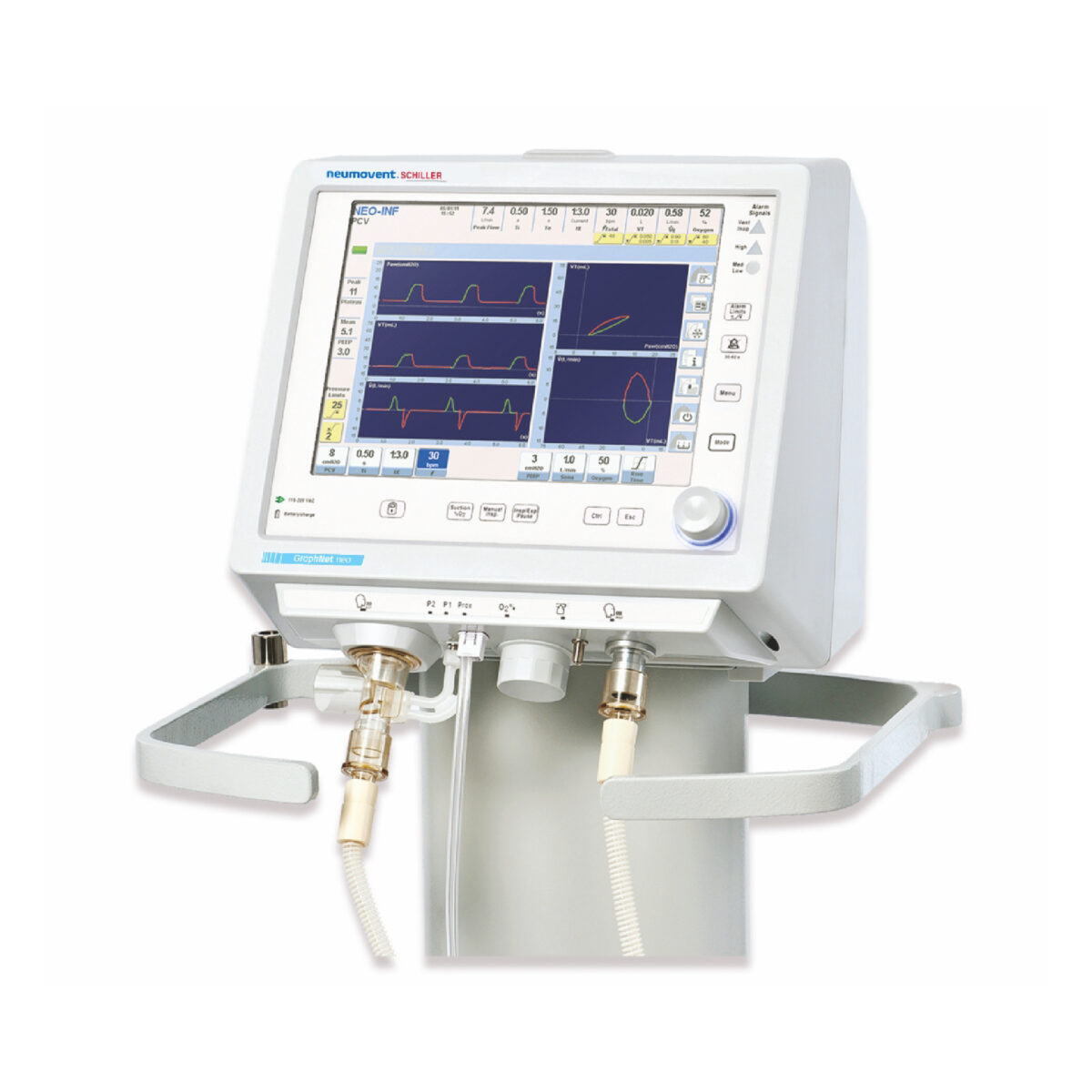
Neumovent (Dedicated Neonatal & Infant Ventilator.)
raphNet neo is a dedicated neonatal and infant ventilator from SCHILLER, designed for both invasive …
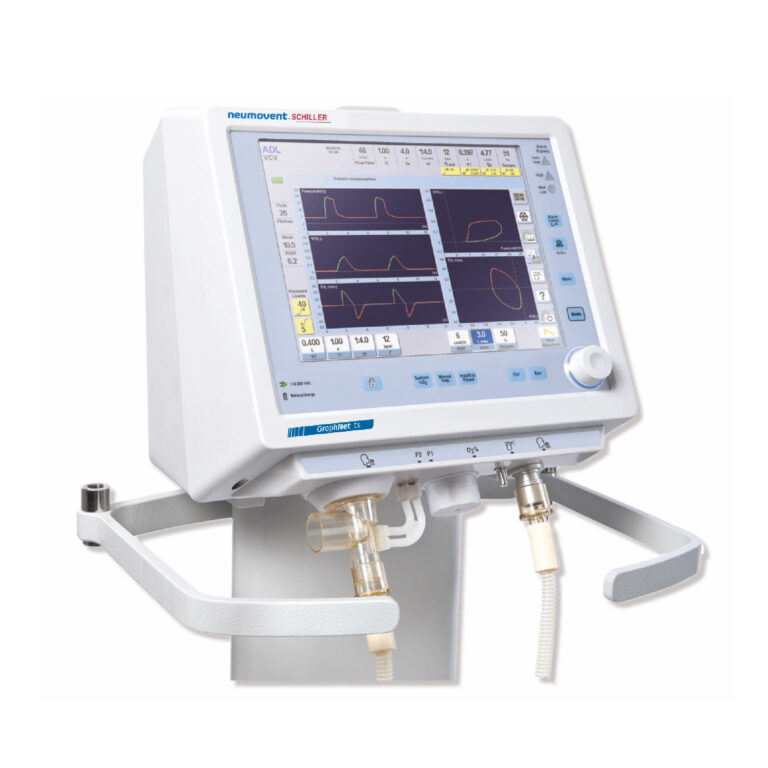
Neumovent
GraphNet ts is a versatile ICU ventilator from SCHILLER, supporting adult, pediatric, and neonatal patients …
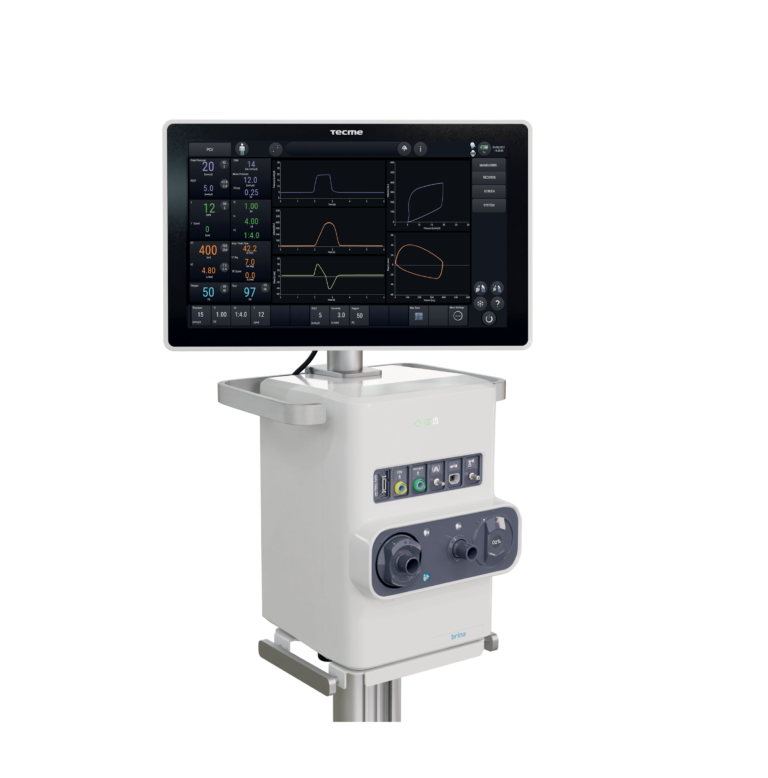
Brina
Introducing brina®, the new high-end mechanical invasive and non-invasive ventilator for adult, paediatric, and neonatal …